NO POLLUTANTS OR TOXIC EMISSIONS 

green thoughts

What are Hazardous Air Pollutants? 

Unsafe air poisons, otherwise called harmful air contaminations or air toxics, are those toxins that are known or thought to cause malignant growth or other genuine wellbeing impacts, for example, conceptive impacts or birth abandons, or unfavorable natural impacts. EPA is working with state, nearby, and ancestral legislatures to lessen air emanations of 188 harmful air poisons to the climate. 

Instances of poisonous air toxins incorporate 

  • Benzene, which is tracked down in gas; 
  • Perchloroethylene, which is radiated from some laundry offices; and 
  • Methylene chloride, which is utilized as a dissolvable paint stripper by various ventures. 

Instances of other recorded air toxics incorporate dioxin, asbestos, toluene, and metals like cadmium, mercury, chromium, and lead compounds. 

Decreasing Emissions of Hazardous Air Pollutants 
green thoughts

How are Being Reduced Hazardous Air Pollutants? 

EPA and our administrative accomplices at the State and nearby levels have made critical moves to decisively decrease poisonous air toxins and give significant wellbeing assurances to Americans from one side of the country to the other. These means include: decreasing harmful discharges from modern sources; lessening emanations from vehicles and motors through new tough outflow norms and cleaner copying gas; and tending to indoor air contamination however deliberate projects. See further subtleties underneath about decreases from: 

  • Modern sources 
  • Portable sources, e.g., vehicles, trucks, and development hardware 
  • Indoor sources, e.g., building materials 

Modern Source Programs 

Significant Sources 

The Clean Air Act requires the EPA to manage dangerous air poisons (HAP) from huge modern offices known as significant sources in two stages. 

The main stage is “innovation-based,” where the EPA creates guidelines for controlling the outflows of air toxics from sources in an industry gathering (or “source classification”). These most extreme feasible control innovation (MACT) principles depend on outflows levels that are as of now being accomplished by the controlled and low-emanating sources in the industry. 

In somewhere around 8 years of setting the MACT guidelines, the Clean Air Act guides the EPA to evaluate the excess well-being and takes a chance from each source classification to decide if the MACT norms safeguard general wellbeing with a more than the adequate edge of security, and safeguard against antagonistic ecological impacts. This subsequent stage is a “risk-based” move toward called lingering risk. Here, the EPA should decide if more wellbeing defensive guidelines are important. 

Additionally, at regular intervals in the wake of setting the MACT guidelines, the Clean Air Act expects that the EPA audit and update the MACT principles, if fundamental, to represent enhancements in air contamination controls as well as anticipation. 

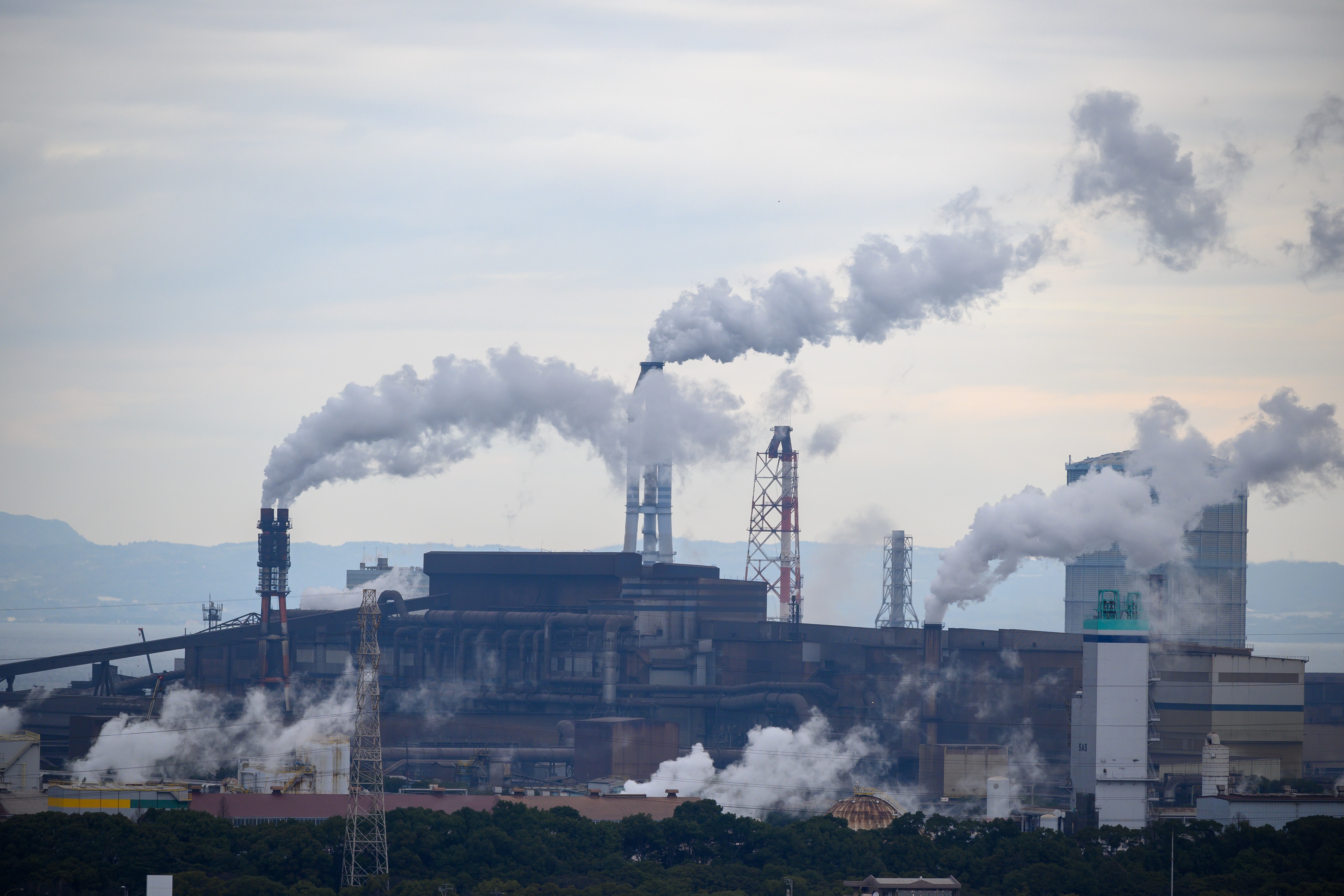
Beginning around 1990, EPA has given guidelines restricting outflows of air toxics from more than 174 classifications of major modern sources including substance plants, petroleum treatment facilities, aviation makers, and steel factories. The necessities in some of these guidelines produced results somewhere in the range of 1999 and 2011. At the point when completely executed, these guidelines are projected to lessen yearly air toxics outflows by around 1.7 million tons. 
Region Sources 

The EPA has additionally finished every one of the expected outflows norms for more modest sources known as region sources. Individual region source offices ordinarily have a lot of lower outflows, yet these sources can be various and far-reaching, they are intensely populated to remember for areas that. In a few metropolitan regions, the amount of region source emanations for classification can be a lot more prominent than discharges from significant sources. Instances of region sources are service stations and cleaners. Estimated from the 1990 pattern stock, we have oppressed somewhere in the range of 90 and 100% of the area wellsprings of metropolitan air poisonous toxins to guidelines and have oppressed 90% of the wellsprings of seven possibly bio-aggregate harmful contaminations to norms. We project that all of the controlled region sources will be consistency no later than 2014. 

The EPA’s region source program likewise incorporates a local area support part since networks with unbalanced dangers might have the option to decrease a few harmful sources all the more rapidly and successfully through neighborhood drives as opposed to through public guidelines. The NATA is an apparatus that state/ancestral and nearby offices, also as networks can use as a part of a neighborhood air toxics assessment to decide expected contaminations and regions for additional consideration. 

Portable Source Programs 

Portable source discharges have been decreased by roughly 50%, around 1.5 million tons of HAPs a year starting around 1990. With extra armada turnover, we anticipate that these decreases should increment to 80 percent constantly in 2030. Moreover, portable source diesel on the street and non-road particulate matter diminished by around 27% from 1990 to 2005. Huge extra decreases (approximately 90%) are projected from 2005 to 2030 as large numbers of the new portable source rules focusing on diesel motors become real. 

The EPA’s latest administrative program that fundamentally decreases portable source air toxins is Tier 3 vehicle and fuel principles, given in 2014, which will diminish emanations of air toxics from engine vehicles somewhere in the range of 10 and 30 percent by 2030, contingent upon the toxin. 

Another administrative program that diminished versatile source air toxics was the 2007 portable source air toxics rule, which controlled the benzene content of gas, as well as vehicle outflows at cold temperatures and emanations from compact fuel holders. A new evaluation in Anchorage, Alaska, recommended that the fuel benzene standard alone decreased surrounding benzene fixations by more than 50percent. 

Different projects that are diminishing portable source air toxins are low-sulfur gas and diesel necessities, uncompromising motor and vehicle principles, controls for little flash start motors and sporting marine motors, the train, and business marine rule, guidelines for nonroad diesel motors, and the North American and Caribbean Emission Control Areas (ECAs) laid out to decrease outflows from ships. 

Non-administrative drives are likewise diminishing portable sources of air toxins. Models incorporate the National Clean Diesel Campaign, Clean School Bus USA, SmartWay, and EPA’s Ports Initiative. Likewise, EPA’s Diesel Emissions Reduction Program (known as “DERA”) was made to send contamination controlling innovations in diesel armadas. Clean diesel projects yield prompt general well-being and air quality advantage. The EPA appraises that for each dollar put resources into decreasing diesel fumes, a local area might accomplish as much as 13 bucks in general medical advantages. From 2008 to 2013, the EPA granted $569 million to retrofit or supplant almost 73,000 motors in vehicles, vessels, trains, or different bits of gear. The EPA appraises that these undertakings will decrease discharges by 14,700 tons of PM2.5 over the lifetime of the impacted motors. 

Indoor Air Programs 

The EPA additionally elevates many projects to assist with decreasing indoor air toxins in homes, schools, and the working environment. Programs for homes remember data for best practices for redesigning, lessening radon, exhortation on satisfactory and legitimate ventilation, and compelling non-compound procedures for bug control. Working on indoor air in schools is additionally a significant concentration as there are various, normal wellsprings of indoor air contamination tracked down in schools. These incorporate workmanship, science, and cleaning supplies, asthma triggers like residue bugs and forms, and diesel fumes from school transports. The EPA has an activity unit for schools to help recognize and decrease these wellsprings of indoor air contamination. Places of business can likewise have critical wellsprings of indoor air contamination. The EPA has collaborated with proficient specialists, alongside building and draftsman relationships to foster a free indoor air configuration guide for planners, plan designers, and project workers. This guide gives reference materials to building experts and for people in general. 

For more information on all things green, Beyond 404 Realty is your local green home expert.
Improving Energy Efficiency at Home

energy efficient

Energy: 

Energy is very essential. Every day, human beings depend on it for both work and relaxation. The superiority of a person’s lifestyle relies on it is very abundant. Without it, there will be no way for people to cook the food appropriately, light up the place at night without using candles, make use of machines, or even drive cars. 

Efficient Energy: 

Efficient energy use or basically called energy efficiency is using less energy to deliver the same level of energy service. Isolating a home is one good example of energy efficiency. Insulating a home permits it to use less heating and cooling energy to attain and retain a relaxed temperature. Improving home energy efficiency offers a lot of benefits. One thing is that energy efficiency decreases electricity feasting and supports saving money. 

Switching to energy saving does not only save money on your bills it also aids the environment by guarding it. It also provides luxury at home.  

Green Efficiency: 

“Green”, “energy efficiency”, and “sustainability” are common terms these days. It looks like people everywhere are doing what they can to lessen their energy overheads and minimize their influence on the environment. 

Home Automation: 

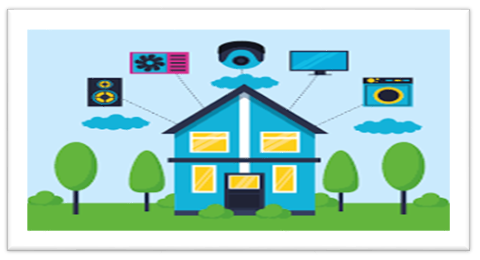
 Home automation permits homeowners to become improved factors of the earth by adjusting the major systems in their homes so that there is less energy waste. Home automation allows you to convert your normal home into a smart home. Improvements in technology give homeowners isolated access and automatic control over several devices, systems, and appliances in their homes. With the push of a button, you can control your lights, HVAC system, safety system, appliances, audio/video system, and more. Home automation provides you the command to control how much energy you are spending although you are home and absent. 

Many families are observing refashioning and renovating their homes to be more energy efficient and maximize inclusive cost reductions. New windows and solar panels are measured as good choices, but an alternative choice is growing in attractiveness. Radiant barriers are a choice to reproduce heat from being fascinated in the home. 

Why does energy efficiency matter? 

Home energy efficiency development matters and should be destructively followed because of its clear job create prospective its long-term feasibility as an emerging building performance industry, and its growing significance in the drive to lessen greenhouse gases. The existing job market is clearly in need of a ‘shot in the arm.’ There is a slight doubt that energy-efficient building development has the touchy job creating potential that is desirable now to support right this economy. 

What is Energy Use Intensity? 

Energy use intensity (EUI) dealings a building’s energy efficiency. It is stated as a purpose of the building size by detecting annual energy usage per square foot of your building. Just put, it can be calculated by distributing your total energy consumption for the year by the total floor area of your building. 

Types of EUI: 

Here are two types of EUIs: the site type and the source type.  

  • Site Type: 

The site type EUI is used to measure the quantity of energy consumed in a building. 

  • Source Type: 

Source type EUI signifies the total amount of energy used to run a company and its procedures; this contains energy used for delivery and moving processes. 

How to compute for EUI? 

Nowadays we have well-known that EUI is energy use per square foot per year, it is time to study how to figure it out. Compute the EUI by separating gross energy consumed in a year, stated in kilowatt-hour or kilo-British Thermal Units (BTUs), over the total square material of the building. 

The number of occupants – EUIs are measured using the total annual energy ingestion and the floor area of a building. Amongst two related buildings with a similar floor area but an altered number of occupants, the building with the advanced number of occupiers would have a higher EUI Value. 

How does EUI Improve Energy Efficiency? 

EUI regulates whether your authentic annual energy consumption exceeds the energy consumption necessary for the size of your building and its occupants. It can be used as a model when enumerating the amount of energy you should decrease. 

EUI indicates you understand your energy presentation improved. Even with just simple knowledge of EUI, you can use it to associate the energy efficiency of buildings related to yours and regulate areas where you can still make enhancements. 

Tips to improve energy efficiency: 

Here are the tips to improve your home energy efficiency: 

Lighting and machines such as kettle, flat iron, television or washing machine, demands high power and so it also charges a lot of money. That’s why it is essential to be responsible and sufficient in doing small things such as switching off the lights whenever you leave the room or avoiding using high-powered machines if not truly essential.  

Windows: 

Numerous types of windows are now planned to role as energy-efficient. These windows are made of materials that are more long-lasting. Some have multiple coats. 

Ventilation 

Another way is to advance the quality of air circulating around the home. Set up ventilation that pumps up fresh air for extreme relaxation. This will significantly expand the home’s energy efficiency. 

Insulation: 

Evaluate the insulation system’s situation in the different parts of the house. Make sure that the floors, ceilings, and the basement walls, as well as the external walls, are correctly insulated. 
Lighting: 

Discover methods to lessen the use of lighting energy. Make use of dimmer switches and occupancy sensors. Change luminous bulbs with compact fluorescents, which save more energy. 

Maximize Appliance Use Value: 

Move the washing machine into ‘half load spin’ when washing a smaller number of clothes. This will stop extra energy used in a fast spin anticipated for heavy loads. 

Wash dishes in the dishwasher because it protects more water than washing them by hand. Set up a clothesline where clothes can be air-dried instead of consuming the dryer. 

Solar Heating: 

Have solar panels fixed on the roof to capture the heat of the sun and generate a solar water heating system? Energy can be expected from indirect sunlight even through cloudy weather. This can proficiently change the electricity or gas to be used in boiling water. 

This will not only help the environment but will also greatly save fuel. 

Carbon Savings: 

Take steps to decrease carbon footprints and save a lot of money. Some procedures are relatively easy to do. Turn off electrical applications at night. Release the charger of the mobile phones. Recycle glasses, plastics, and paper. If possible, use a bicycle or walk instead of using a car. 

Containing warm and cold air within the occupied rooms or improving insulation: 

– Close curtains to stop air from escaping. 

– You can increase heat containment by using insulating paints. 

– When you sleep, make use of thicker clothes and blankets. 

Prevent Air leaks: 

– Advance weather stripping. Appropriate sealing of windows, doors, and trunks stop air to escape from the radiators. 

– If there is no so momentous human activity, but 1 or 2 people occupy the room, light up acute areas of the home only. 

– Use energy-saving bulbs like dense fluorescent. 

Home Improvements: 

– Make use of renewable energy procedures like solar panels. 

– Fix light dimmers to adjust light depending on the time of day. 

– Make use of plants for rising shading. 

– Machines should be changed when worn out or should be properly retained. 

Do Not Practice Heating and Air Conditioning Concurrently 

For improved energy efficiency, implement control systems with default settings that are perfect for the building, which do not function heating and cooling systems concurrently and can totally close part of the distribution circuit. Hence, one can use time switches to switch on and off HVAC systems at assured times of the day, such as before and after the start of a shift, programming in for public holidays, all of which go into decreasing annual running time. Smart time switches are available that work out the best operating period and condense the operating time meaningfully. 

Avoid Inadequate Use of Heating Systems with the Following Tips 

In the case of buildings with commercial, administrative, or industrial activities, the temperature should not cross 20°C to 22°C inside the rooms. Hospitals and health centers have advanced temperature settings and gymnasiums and sports centers have conceivable colder ambient temperatures. 

Retain a check on the opening of windows (both in cold and hot weather) or have your heating or cooling systems reliant on closed windows. 

Conclusion: 

Insulation is an appreciated investment. If you participate in the right product and you have professionals put it in, you will see important savings on your energy bills. You can feel good about making this investment, too. You may succeed with an energy credit or you could find that the cost of it is far less expensive than you consider. The right product, connected appropriately could even help you to save money (and pay for itself) in the long term. It may be just the right choice for your home’s long-term maintenance and upkeep too.